

I’ve written a lot of op-eds on climate change, but this piece from 2020 feels eerily prescient today. The core idea is simple: a hotter world will look different from the world we live in now. Forests, coastlines, deserts, and other ecosystems will all shift as the climate changes.
So how do we get from the world of today to a future where forests and other ecosystems occupy different parts of the landscape? The transition will not be smooth. Forests do not simply pack up and slowly walk toward their new locations over a few decades, like the Ents in The Lord of the Rings.
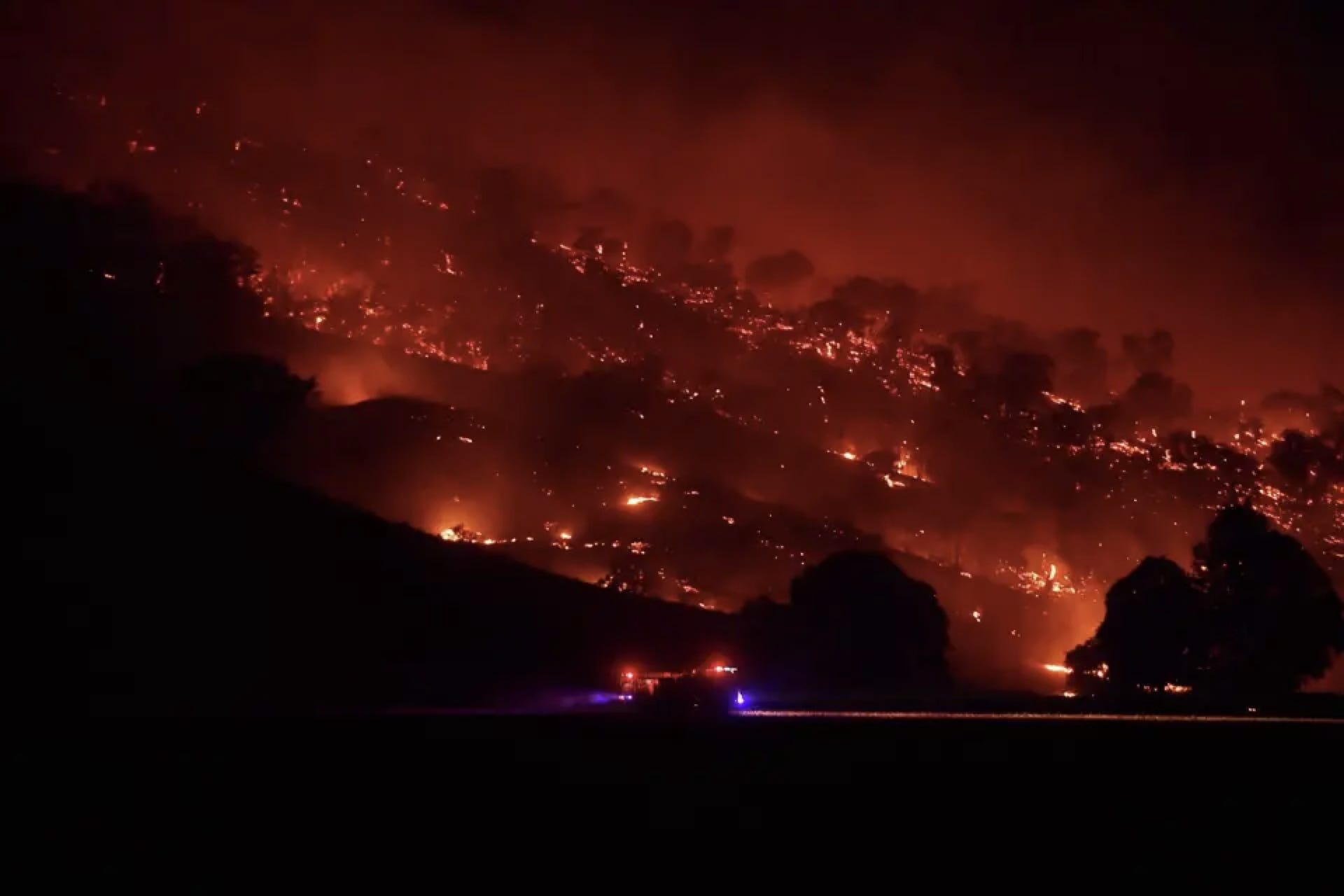
Instead, the transition happens through violent, discrete events — like the massive wildfires burning around the world right now. Old forests burn, and what grows back may be a different kind of forest, or perhaps not a forest at all. At the same time, forests will begin to establish themselves in places that were once too cold or otherwise inhospitable. In other words, the forests are on the move.
That is what makes this moment so striking. We aren’t just watching extreme weather. We are watching the world literally remake itself.
Commentary: Climate change is remaking the world
By Andrew E. Dessler, For the Express-News, Updated Jan 21, 2020 1:30 p.m.
The brush fires raging across Australia have been cited as evidence of climate change, but they are also the stunning process of the Earth remaking itself as the climate warms.
NASA and NOAA recently announced 2019 was the second-hottest year on record, trailing only 2016.
It’s been 43 years since global temperatures weren’t above average. Fires are scorching broad swaths of Australia, as they have around the world, from California to Siberia. The seas are rising, taking over real estate in South Florida on sunny days and devastating coastal communities when hurricanes strike.
This is not just destruction. It is transformation.
We are seeing the world remade before our eyes.
During the depth of the last ice age 20,000 years ago, the world was a different place. Ice sheets, thousands of feet thick, covered much of North America. Sea levels were 300 feet lower, changing the contours of the continents. Woolly mammoths roamed North America. The environment looked different, and ecosystems were made up of plants and animals that are quite different from today’s critters.
What’s amazing is that the planet was only 10 degrees Fahrenheit colder at that time.
Let me repeat that: If you cool the Earth by 10 degrees Fahrenheit, you end up with a completely different planet.
If we don’t take action to head off climate change, we could experience 10 degrees Fahrenheit of warming in the next century or two, comparable to the warming since the last ice age. If it occurs, such warming would remake the face of Earth. That future Earth would be as unrecognizable to those of us living today as the last ice age.
Humans are really good at “linear thinking,” so most people imagine that impacts of climate change will be small changes occurring over many years, summing eventually to large changes. But that’s not the way it will happen. The transformation to come will be decidedly nonlinear, meaning it will not occur as small impacts over many years but rather a series of infrequent, huge events of enormous destructive power.
Consider how sea level rise interacts with New York City. As the sea rises, there is little impact until the seas become high enough that storm surges reach the entrance to the subway. At that instant during Hurricane Sandy, for example, the damages skyrocketed, causing billions more in damages than the city would’ve seen in a world that hadn’t warmed. Such nonlinear effects will interact with other problems, such as unwise and inequitable development, to exacerbate the overall impacts.
Hurricane Harvey was a good example of this. So was the 2011 Texas drought, which killed 300 million trees — and went a long way toward changing, potentially permanently, the face of Texas.
The extreme fires in California and Australia are doing the same thing to other parts of the planet.
These tragedies are not one-off events and should not be viewed that way. They need to be viewed as part of a long-term process, the vanguard of fundamental changes in the Earth system we will experience as we transition to a new, much warmer and much different planet.
With great sorrow, we are able to watch as the Earth is rebuilt into a different, warmer planet.
What is particularly worrying is we’re seeing these severe impacts with only about 2 degrees Fahrenheit of warming. If we get all the way to 10 degrees Fahrenheit, the tragedies we’re seeing play out now will seem quaint by comparison.
At this point, we’ve missed the boat at completely preventing climate change. Our atmosphere has been fundamentally altered by carbon pollution. However, that does not mean we should give up. We still have the ability to decide whether we experience the worst case or not. We can still choose to protect those most at risk, those already struggling to survive, and in doing so protect everyone else as well.
As we watch, the climate is changing our planet in ways we are only just beginning to comprehend, giving us a glimpse of our planet’s future that eventually may be unrecognizable. The sooner we replace fossil fuels with renewables, the more likely we are to have a planet in 2100 that still resembles the one we know and love today.
Andrew E. Dessler is a professor of atmospheric sciences at Texas A&M University who studies the science and politics of climate change. Follow him on Twitter at @andrewdessler. [update: Follow him on bluesky.]
Related posts
We’ve written several things about wildfires, so check them out:
I’d be grateful if you could hit the like button ❤️ below! It helps more people discover these ideas and lets me know what’s connecting with readers.
That the level of fire the earth is experiencing is not just a symptom to human impacts, but the earth evolving, is profound. Thanks for elucidating that!!
"Instead, the transition happens through violent, discrete events..."
----
Smooth forecast lines of trends are a major problem when dealing with public expectation, especially when the coastal town manager is trying to address, say, sea level rise without busting the budget. The result is spending a very large chunk of money on some sort of resiliency project, only to find out it was too little, too late, when the money could have been used for something else.
"Andrea Dutton PhD: Sea Level Rise - How Fast?"
https://www.youtube.com/watch?v=flHkeuOUSyc
Meanwhile, I'm the asshole that keeps telling people it's time for triage, and people have to fight being sentimental about things and places that they are attached to. That land you bought to retire to out West? There's no more water. That house in the Florida community that looked so good in the brochure will cost ever more to insure. The once-attractive Sun Belt will be known as the Dangerous Heat Belt.
The realtors, of course, will fight you all the way, but the property values and the associated tax revenue will go into a death spiral anyway.