

Last week, I attended a meeting at Columbia University on attribution science and climate law, hosted by the Sabin Center. It was a fantastic event, bringing together scientists and legal experts working at the intersection of extreme event attribution and climate law.
For those unfamiliar with it, extreme event attribution attempts to quantify the contribution of climate change to an extreme event. For example, several groups analyzed the impact of climate change on Hurricane Harvey’s enormous rainfall totals over Houston, Texas and they found that climate change increased rainfall by 15 to 38%.
One thing that came up again and again was how terrified fossil-fuel interests are of extreme event attribution science. They are acutely aware that this research could land them in court. And losing those cases would leave them legally liable for billions of dollars in climate damages.
Because the legal stakes are so high, the blowback has turned ugly. I spoke with several scientists at the meeting who are facing ongoing harassment over their work.
This blowback is a coordinated campaign to make the entire field look suspect. The goal is to create the impression that attribution science is too uncertain, too political, or too conflicted to be useful in court or in public policy. The strategy is not based on actual science or evidence of misconduct, but on the generation of doubt.
The new Merchants of Doubt
We’ve seen this before. In fact, not that long ago: We only have to go back a year to the Department of Energy (DOE) Climate Working Group (CWG) report to see an example of using doubt as the tool to push back against well-established science.
This strategy is laid out in an email from a member of the CWG, Dr. Roy Spencer, that was released during litigation over the Climate Working Group process.
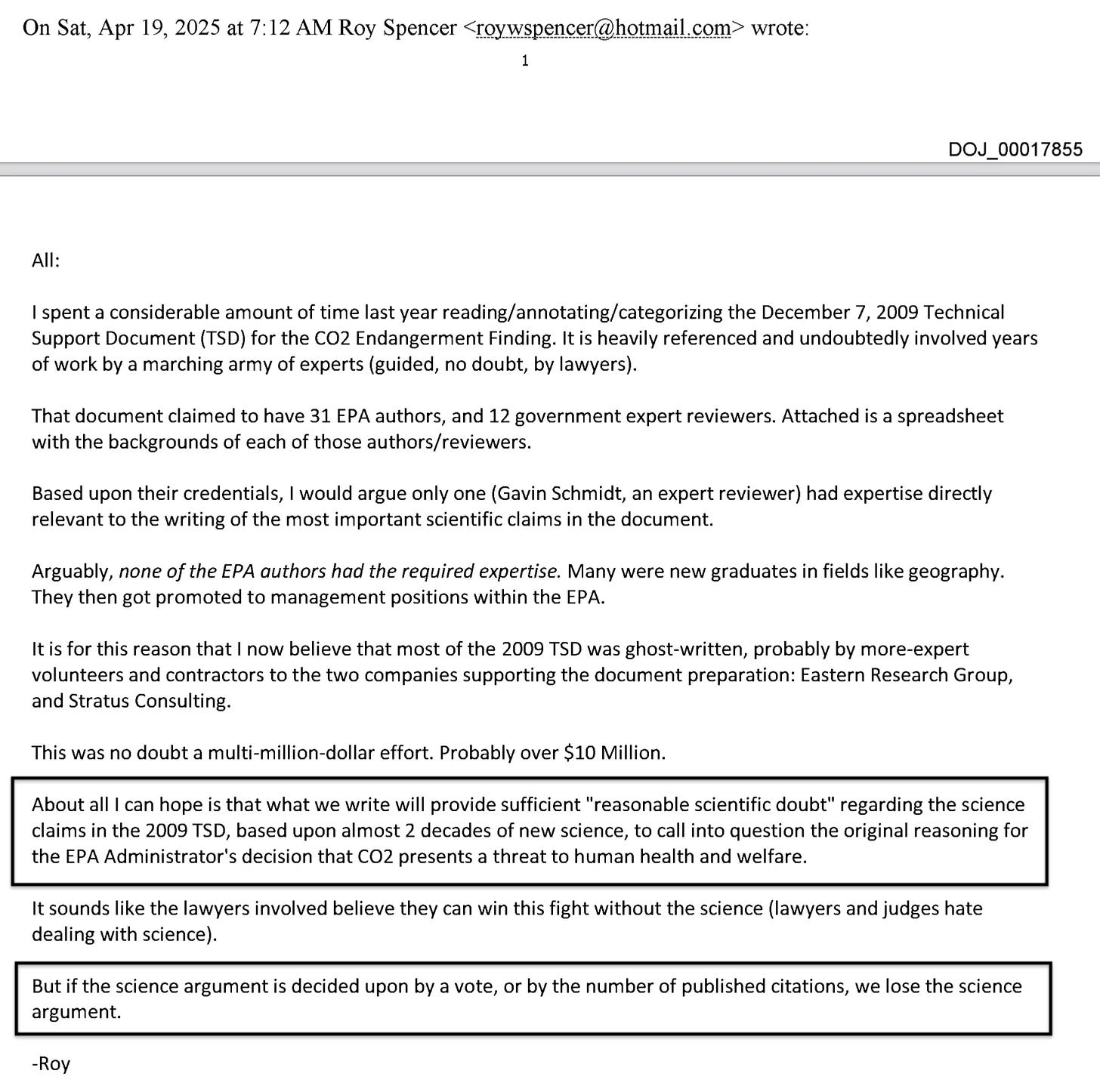
The key quote is:
About all I can hope is that what we write will provide sufficient “reasonable scientific doubt” regarding the science claims in the 2009 TSD [technical support document], based upon almost 2 decades of new science, to call into question the original reasoning for the EPA Administrator’s decision that CO2 presents a threat to human health and welfare.
This statement is strong evidence that at least some members of the committee were working to support a particular policy outcome: revoking the Endangerment Finding. The email also explains how they planned to do it: by attempting to generate “reasonable doubt”.
This is going to be hard, Spencer implies. Despite falsely claiming that “2 decades of new science” weakens the case, Spencer explicitly acknowledges that the actual peer-reviewed science of climate change overwhelmingly rejects his position:
But if the science argument is decided upon by a vote, or by the number of published citations, we lose the science argument.
We can go back even further: This CWG email shares unmistakable DNA with the infamous 1969 tobacco memo that declared: “Doubt is our product, since it is the best means of competing with the ‘body of fact’ that exists in the mind of the general public. It is also the means of establishing a controversy.”
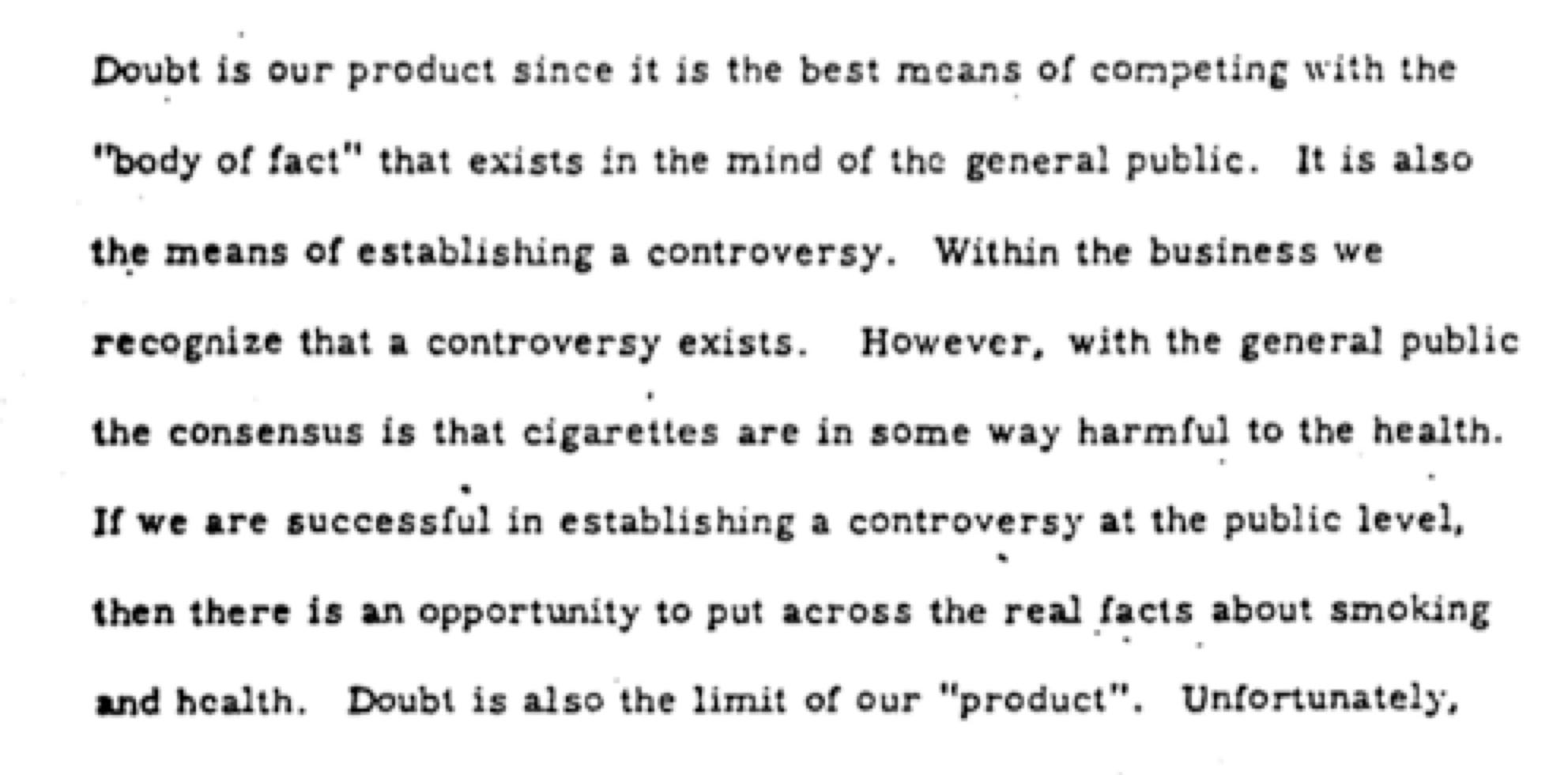
The tobacco memo also acknowledges the limit of this strategy: Like the CWG, they knew the science was not on their side.
The new new Merchants of Doubt
The people attacking the IPCC chapter on extreme event attribution are the newest iteration of the Merchants of Doubt. Their goal, like all Merchants before them, is to introduce doubt into the process.
Because the report is not even out yet, they cannot attack its conclusions. So they are attacking the authors instead. Here is a press release from the House Science, Space, and Technology Committee:
In the letter, the Chairmen express concerns about potential conflicts of interest involving members of the Attribution Committee, stating that “publicly available information suggests a troubling pattern” in which committee members are affiliated with nonprofits that support climate accountability lawsuits, “raising the appearance of impropriety and member bias.”
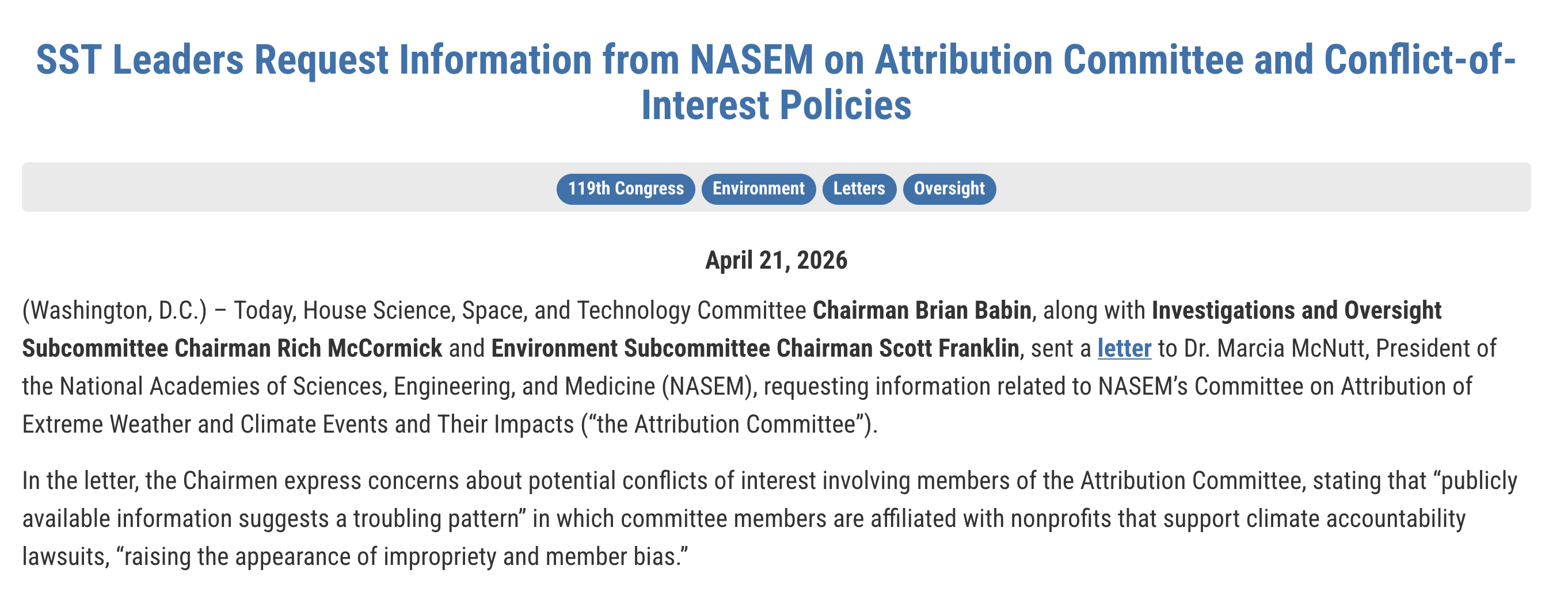
To be clear, this is just innuendo. There is no actual evidence of bias. And given the robust process that these reports go through, including multiple lines of peer review, it seems very unlikely that significant bias can survive into the report.
When the report comes out, critics will have the opportunity to make legitimate criticisms of the report — if any exist. If none do, however, they’ll still make criticisms, but they’ll be bogus, simply designed to generate doubt. We’ll see.
A note to the press: Fix your frame
To any journalists reading this: The public debate over extreme event attribution science is not going away. The science is simply too dangerous to fossil-fuel interests for them to stop fighting it.
You very well might be assigned to write an article about this area of research in the future. When you do, do not automatically adopt the framing that climate misinformers want you to use.
They want you to frame the story around questions like: Are climate scientists trying to put their thumb on the scale to achieve a predetermined, politically motivated result? Are climate scientists improperly letting their politics invade the science of the IPCC?
That frame is a trap.
Instead, you need to view this through the historical lens of the Merchants of Doubt. How does the ecosystem of doubt operate? Who funds it? What methods do they use to misrepresent science and slime researchers? What scientific results are they trying to keep people from understanding are legitimate?
Ultimately, you need to focus your article on the generation of doubt as a way to maintain the fossil fuel industry’s social and legal license to keep burning oil, gas, and coal.
If you treat the misinformers’ frame as a legitimate, good-faith scientific critique, you are helping them produce doubt. Don’t do it. Don’t be a Merchant of Doubt.
other stuff
The Staying Curious Substack has an interesting post about the different flavors of climate sensitivity. This is crucial information if you want to understand how scientists think about how much warming the Earth will experience.
I’d be grateful if you could hit the like button ❤️ below! It helps more people discover these ideas and lets me know what’s connecting with readers.
The fossil fuel industry, just like the tobacco industry before, is trying to get people to ignore science and the facts so that they can continue to destroy ur wolrd and our health without consequences. Thank you for shining a light on this strategy, Andrew. I had not heard that scientists and attorneys were workiing together to highlight the facts!
Thanks so much for the kind mention, Andrew—I appreciate you pointing your readers toward the sensitivity piece. It means a lot coming from you, especially about a subject that I think people have a tough time understanding.